In chains, he defended the truth about Christ. In Rome, he gave his life for Him.
Ignatius confessed Jesus Christ as truly God and truly man, crucified and risen. Taken to Rome for execution, the bishop of Antioch wrote seven letters defending that faith, the Eucharist, and the unity of the Church. The beasts could take his life. They could not make him deny his Lord.
FormationLinked to Saint John by ancient tradition
WritingsSeven surviving letters
WitnessMartyrdom in Rome
01
Ignatius served the Church at Antioch.
Ancient Christian tradition associates Ignatius with the circle of Saint John the Apostle. He became Bishop of Antioch, the city where the followers of Jesus were first called Christians.
His letters belong to a Church still close to the apostolic age. They show a bishop concerned with the unity of Christians, the truth about Christ, and the worship of the Church.
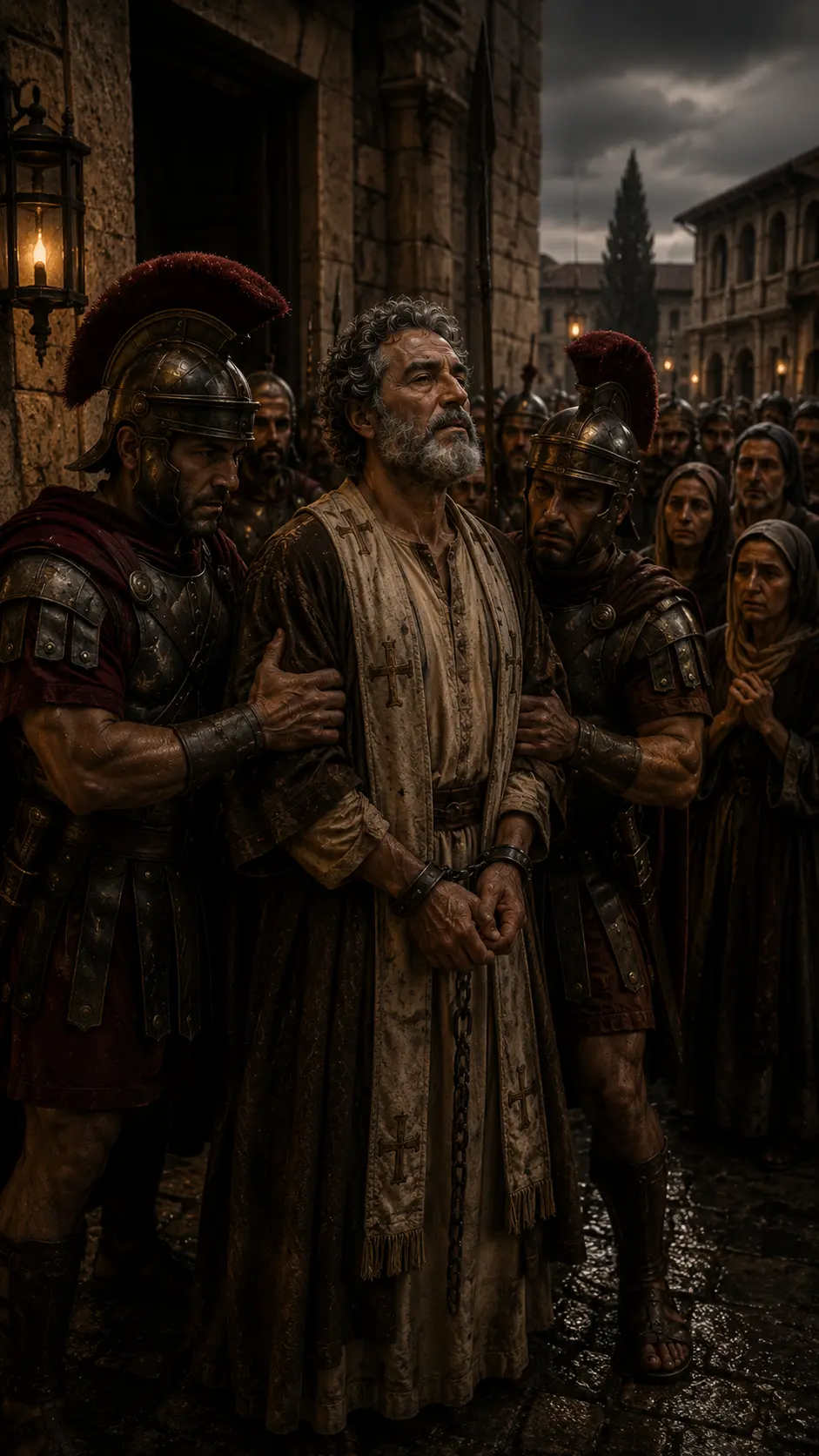
The bishop of Antioch begins the road to Rome under guard.
02
The journey to Rome became his final instruction.
Roman soldiers took Ignatius westward from Syria to be executed in Rome. Along the road he wrote to churches in Asia Minor and to the Christians awaiting him in the imperial capital.
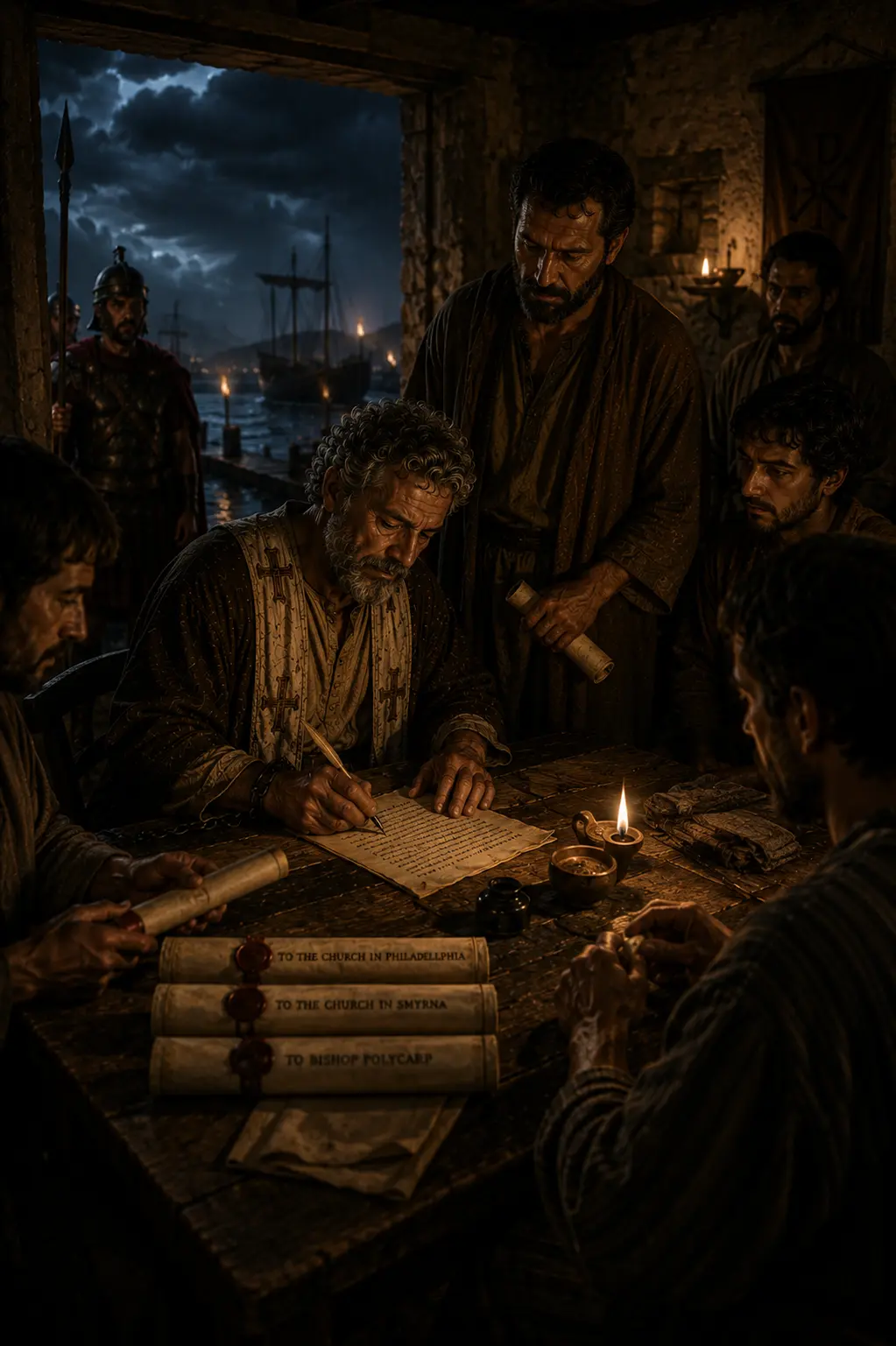
The seven surviving letters urge Christians to remain united with their bishops, reject false teaching, confess that Christ truly came in the flesh, and hold fast to the Eucharist. Written under guard, they preserve the concerns of an early Christian pastor in his own words.
Ignatius rejected any teaching that reduced Christ’s flesh and suffering to an appearance. The Son of God had truly become man, truly suffered, and truly risen. He defended the Eucharist as the flesh of this same Savior and urged the churches to remain united in faith, charity, and communion with their bishops.
Seven letters survive from Ignatius’s journey under guard.
03
He knew what awaited him in Rome.
Ignatius knew what awaited him and asked the Roman Christians not to intervene to save him. His letter presents this as the final offering of his own life, not as a command laid upon others.
Ancient tradition holds that he was killed by wild beasts in Rome around the beginning of the second century. The letters written on that last journey remain among the clearest witnesses to the life and belief of the early Church.
Condemned to the beasts. Faithful to Christ.
At a glance
Timeline
Apostolic era
Ancient Christian tradition associates Ignatius with the circle of Saint John the Apostle.
Early second century
Serves as Bishop of Antioch.
Journey to Rome
Writes seven surviving letters while under military guard.
c. AD 107
Suffers martyrdom in Rome.
Watch the story
Saint Ignatius: Near to God
A brief account of the bishop of Antioch and the letters he wrote while being taken to Rome.
Sources & further reading
Sources
Saint Ignatius, Letter to the Smyrnaeans, 6–8; Letter to the Romans, 5–6Primary writings: the Eucharist, communion with the bishop, and fidelity to Christ unto death.
Ignatius believed that the One awaiting him beyond death was the same Lord he worshipped in the Eucharist. Love for Christ bound him to the Church and gave his final witness its force. The Church honors martyrdom as fidelity to Christ even unto death, sustained by charity.
That faith reaches us as a demand. Approach the Eucharist with reverence. Confess grave sin before receiving Holy Communion. Remain faithful to the Church’s teaching and communion. Serve your parish. Refuse the pride that makes your own preferences the measure of the faith.
You may never face an arena. You still face the choice to obey Christ or protect your comfort. Let His grace strengthen you. Hold fast when truth is unpopular. Love when charity is costly. Carry the faith he refused to surrender.
Available now
Bishop of Antioch
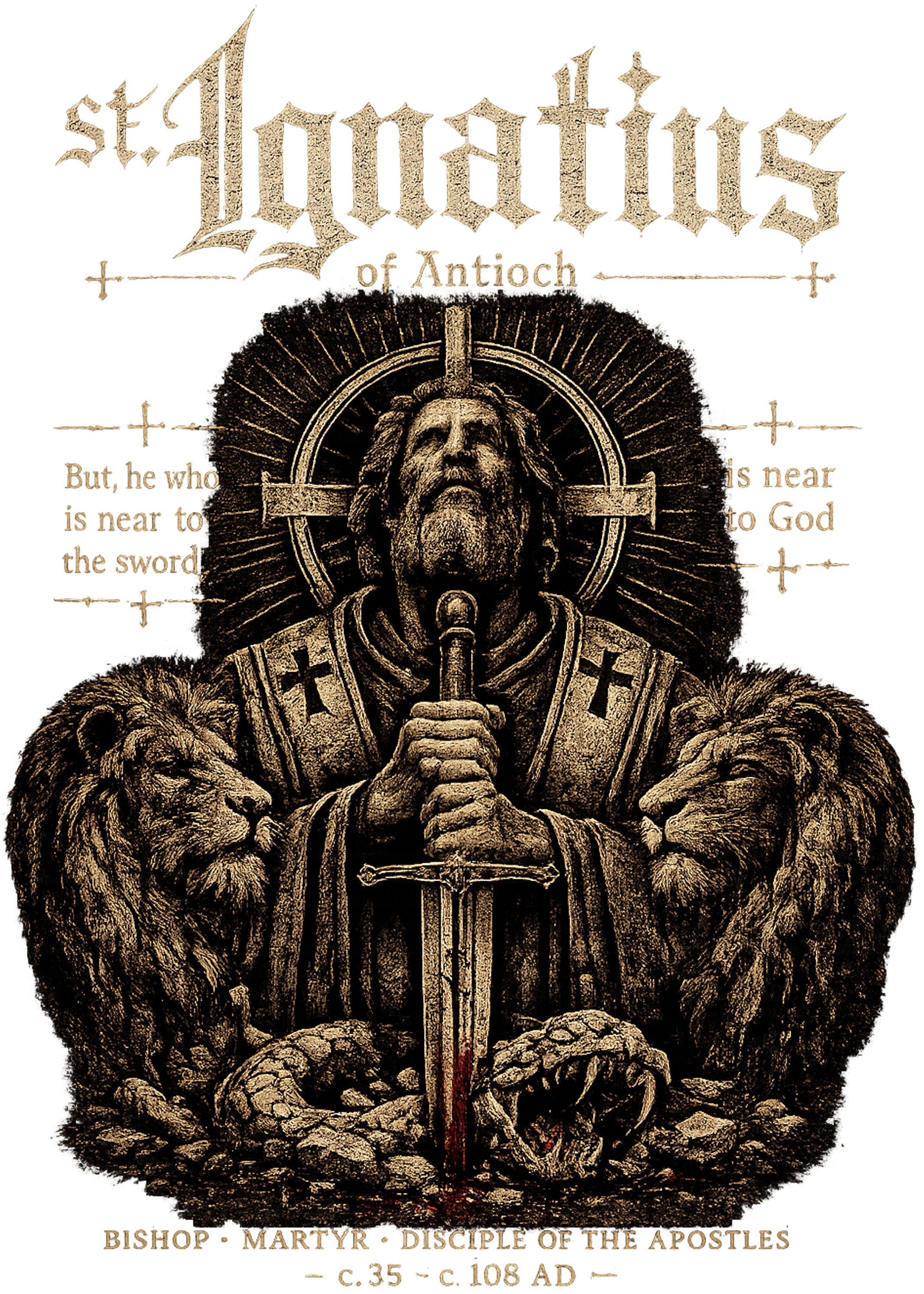
Saint Ignatius of Antioch — Near to God Heavyweight Tee